


Practice Guidance & Local Pet Care
What Makes a Great Long-Term Veterinary Partner?
See why trust, preventive care, communication, and familiarity with your pet’s health can strengthen a long-term relationship with your veterinary team.
Home » Preparing for Your First Visit to Primary Pet Care
Visiting a new veterinarian can come with plenty of questions. Should you bring your pet’s records? What about medications? Should your pet eat before the appointment? And how much time should you plan for?
A little preparation can make that first visit easier for you, your pet, and the veterinary team.
At Primary Pet Care, a first appointment is also an opportunity for us to begin getting to know your pet—their health history, current needs, daily routine, and any concerns you may have. Our goal is to take the time needed to understand the individual patient and help you make informed decisions about their care.
Here’s what you can expect when preparing for your first visit.
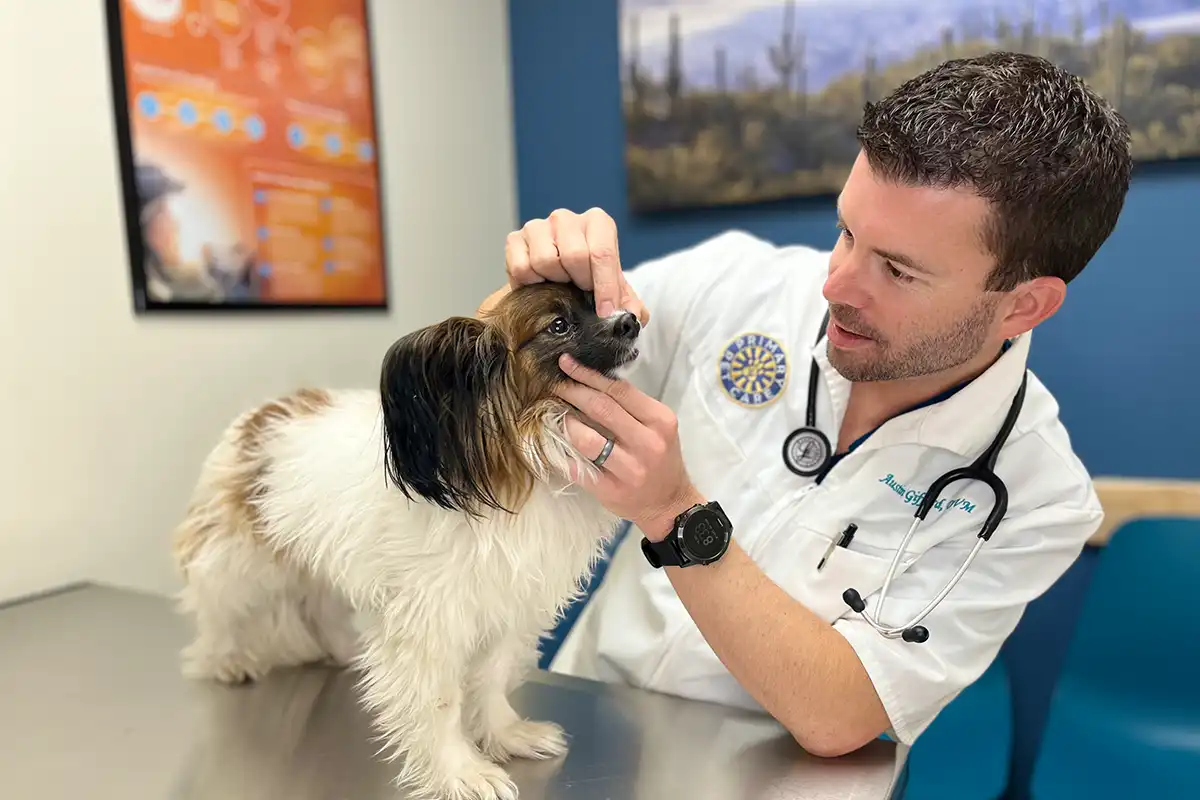
A first visit is about more than addressing what may be happening with your pet today. It gives your veterinarian an opportunity to establish a baseline for your pet’s health and begin building a history that can become increasingly valuable over time.
Even when a pet appears healthy, a veterinary examination can help identify changes or concerns that may not be obvious at home. It is also a good opportunity to discuss preventive care, nutrition, medications, previous health issues, and anything you have noticed about your pet’s behavior or routine.
For new puppies and kittens, establishing veterinary care early can also help create a plan for vaccinations, preventive care, development, and other needs as they grow.
For adult and senior pets, previous medical history and changes over time can provide important context for ongoing care.
If you’re ready to establish care with Primary Pet Care, you can request an appointment and begin building a long-term veterinary relationship for your pet.
You don’t need to arrive with everything perfectly organized. However, having a few pieces of information available can help us develop a more complete picture of your pet.
When possible, come prepared with:
Bringing your pet’s current medications with you can be especially helpful. Medication names, strengths, and instructions aren’t always easy to remember, and having the medication available allows the veterinary team to review exactly what your pet is receiving.
Previous veterinary records can also provide useful context about vaccinations, laboratory results, past illnesses, procedures, and other aspects of your pet’s medical history.
Don’t worry if you don’t have every record available before scheduling. If you’re uncertain about what is needed, contact Primary Pet Care and we can help you determine what information may be useful.
This is another common question.
Primary Pet Care may recommend fasting before an appointment when bloodwork is anticipated because fasting can help improve the quality of certain bloodwork results.
However, preparation can depend on the individual pet and reason for the visit. If you’re unsure whether your pet should eat before an upcoming appointment, ask our team when scheduling rather than making that decision on your own.
Every patient is different, so every first appointment won’t look exactly the same.
Your veterinarian will typically want to understand your pet’s medical history, current medications, diet, previous illnesses, and the reason for the visit. A physical examination provides another opportunity to assess your pet’s overall health and identify areas that may warrant further discussion or evaluation.
This is also your time to ask questions.
If you’ve noticed a change in appetite, activity, behavior, mobility, bathroom habits, or anything else that concerns you, mention it. Something that seems minor at home may provide useful context when considered alongside your pet’s history and examination.
For pets establishing routine care, we may also discuss appropriate wellness and preventive care based on factors such as age, lifestyle, medical history, and individual needs.
And don’t forget about getting your pet safely through the door: dogs should arrive on a leash, and cats should be brought in a secure carrier or kennel.
One thing we want new clients to understand is that appointment length can vary.
A straightforward visit may require less time, while a new or complicated case may take 60 to 90 minutes.
Primary Pet Care is a detailed and thorough veterinary practice. Rather than treating every appointment as though it should fit into exactly the same amount of time, we want to allocate the time necessary to understand each patient and the condition or concerns being evaluated.
That may include reviewing a longer medical history, discussing multiple concerns, examining previous treatments or medications, considering diagnostic options, or simply making sure you have the opportunity to ask questions and understand the recommendations being made.
For us, taking the appropriate amount of time is part of providing thoughtful veterinary care.
Establishing care before your pet is sick can make future veterinary visits more valuable.
Routine wellness exams allow your veterinarian to become familiar with your pet when they are doing well. Over time, that history can provide useful context when something changes.
It also gives us opportunities to discuss preventive care and other factors that may affect your pet’s health throughout different stages of life.
Just as importantly, an ongoing veterinary relationship gives you somewhere to turn when you have questions.
You shouldn’t have to determine on your own whether every change you notice is important. Your veterinarian can help determine when something can be monitored and when an examination or additional evaluation may be appropriate.
Our approach is to provide practical guidance based on the individual pet—not simply a one-size-fits-all plan.
Your first appointment doesn’t require perfect preparation.
Bring the information you have, your current medications when applicable, and the questions or concerns that matter to you. We’ll take it from there together.
If you’re considering Primary Pet Care for your pet, you can request an appointment online. If you have a question before scheduling or aren’t sure what type of appointment your pet needs, contact our team for guidance.
We look forward to getting to know you and your pet.
See why trust, preventive care, communication, and familiarity with your pet’s health can strengthen a long-term relationship with your veterinary team.
Get prepared for your first visit with practical guidance on records, medications, appointment expectations, and how Primary Pet Care approaches new patient care.