

Practice Guidance & Local Pet Care
What Makes a Great Long-Term Veterinary Partner?
See why trust, preventive care, communication, and familiarity with your pet’s health can strengthen a long-term relationship with your veterinary team.

Home » What Makes a Great Long-Term Veterinary Partner?
Finding a veterinarian is about more than choosing where to go when your pet is sick. Ideally, your veterinary team becomes a familiar resource throughout your pet’s life, from routine preventive care to unexpected health concerns and the changes that can come with age.
Over time, that relationship can give your veterinarian valuable context about your pet as an individual. It also gives you the opportunity to build trust with a team that understands your concerns, knows your pet’s history, and can help you make informed decisions as their needs change.
At Primary Pet Care, we believe that continuity is an important part of providing thoughtful veterinary care.
No two pets respond to care in exactly the same way.
A treatment or medication that works very well for one animal may not be as effective for another. Some pets may also experience side effects or have other health considerations that influence which options are appropriate.
When your veterinary team has cared for your pet over time, that history becomes useful information. They may already know how your pet has responded to previous treatments, which medications have worked well, and which approaches have not.
There will not always be multiple treatment options available, but when there are, knowing your pet’s history can help your veterinarian make more informed recommendations from the beginning. In some situations, that can also save pet owners time and expense by avoiding approaches that have already proven unsuccessful for their pet.
A medical record contains important information, but an ongoing veterinary relationship can provide additional context.
With regular visits, your veterinarian has opportunities to become familiar with your pet’s health history, previous illnesses, medications, test results, and individual needs. That familiarity can become increasingly valuable as your pet gets older or develops new health concerns.
It also means each appointment does not have to exist in isolation. A new symptom or change can be considered alongside what your veterinary team already knows about your pet.
That continuity is one reason choosing a primary veterinarian you trust can be valuable throughout your pet’s life.
It can be easy to think veterinary care is only necessary when something is obviously wrong. Routine care serves a different purpose.
Regular pet wellness exams give your veterinarian opportunities to evaluate your pet when they appear healthy and establish a clearer picture of what is normal for them. Over time, those visits can help identify changes or abnormal trends that may deserve closer attention.
Veterinarians are trained to evaluate an animal’s health and well-being as a whole. Changes that may not seem significant at home can sometimes provide useful information when considered alongside a physical examination, medical history, previous findings, and other aspects of the pet’s health.
Finding a concern does not necessarily mean there is a serious problem. It does give your veterinarian an opportunity to determine whether monitoring, additional evaluation, or treatment may be appropriate before the issue becomes more significant.
Preventive care is therefore not simply a series of routine appointments. It is part of building an ongoing understanding of your pet’s health.
A productive relationship with a veterinarian depends on mutual trust and respect.
Pet owners know their animals in ways a veterinary team cannot. You see your pet’s normal routines, appetite, behavior, activity, and personality every day. Sharing changes and concerns gives your veterinarian information that can be important when evaluating your pet.
Your veterinary team brings medical training, clinical experience, and professional judgment to that conversation.
A strong relationship allows both perspectives to contribute to your pet’s care. You should feel comfortable asking questions and discussing concerns, while also having confidence that your veterinary team is recommending care with your pet’s health and well-being in mind.
That trust becomes particularly important when a pet develops a complicated condition or when a family needs to make a difficult healthcare decision.
Cost is understandably part of choosing veterinary care, but it is only one consideration.
Look for a veterinarian you trust and feel comfortable working with. Consider whether the veterinary team takes time to understand your pet, communicates clearly, answers your questions, and provides recommendations you feel comfortable discussing.
Continuity also matters. A veterinarian who knows your pet well may have valuable context when a new concern develops and can take previous responses to medications and treatments into consideration when options are available.
The goal is not simply to find a veterinary clinic for the next appointment. It is to establish a relationship that can continue to support your pet through different stages of life.
At Primary Pet Care, our goal is to care for pets as individuals and build relationships with the people who care for them.
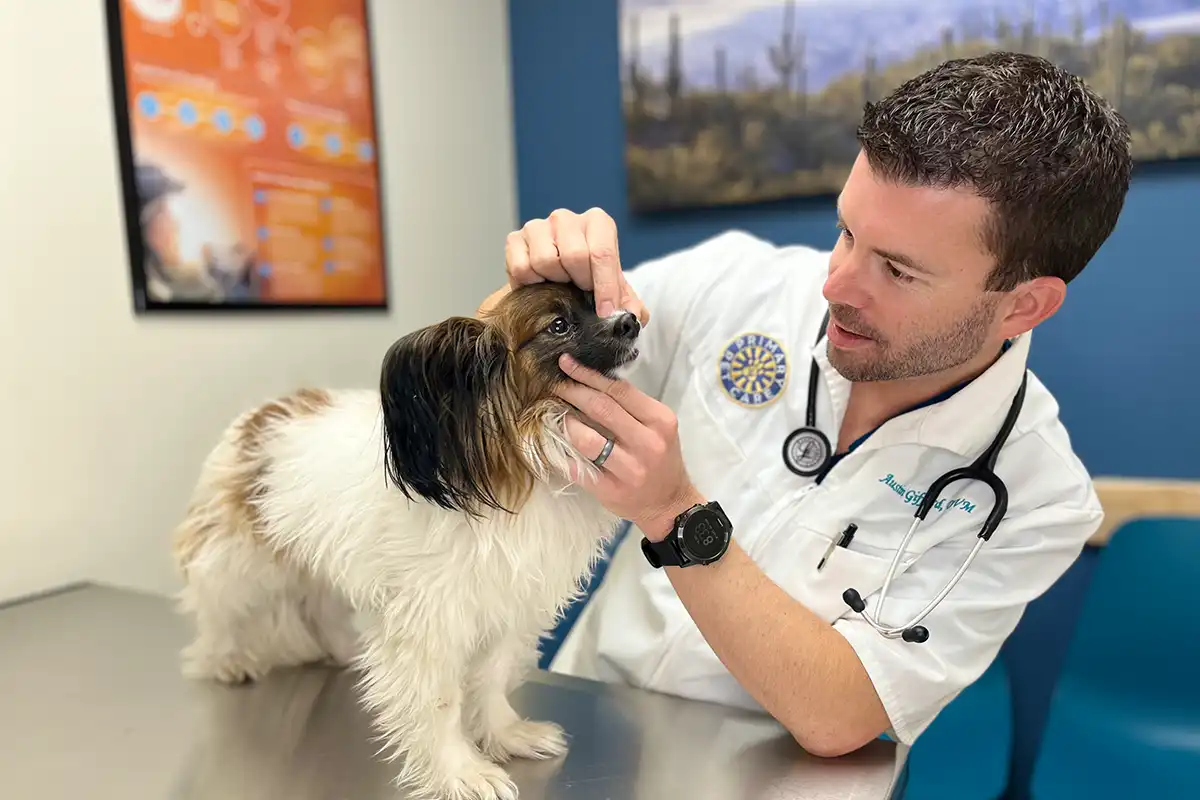
For Dr. Austin Gifford, success means more than addressing an individual illness or completing a routine visit. The goal is for patients to be as healthy and comfortable as possible and for their owners to have peace of mind knowing their pet’s health is in good hands.
That kind of relationship develops over time.
You can meet the Primary Pet Care team to learn more about the people behind your pet’s care. If you are looking for a primary veterinarian in Mesa and are ready to establish care, you can also request an appointment online.
See why trust, preventive care, communication, and familiarity with your pet’s health can strengthen a long-term relationship with your veterinary team.
Get prepared for your first visit with practical guidance on records, medications, appointment expectations, and how Primary Pet Care approaches new patient care.